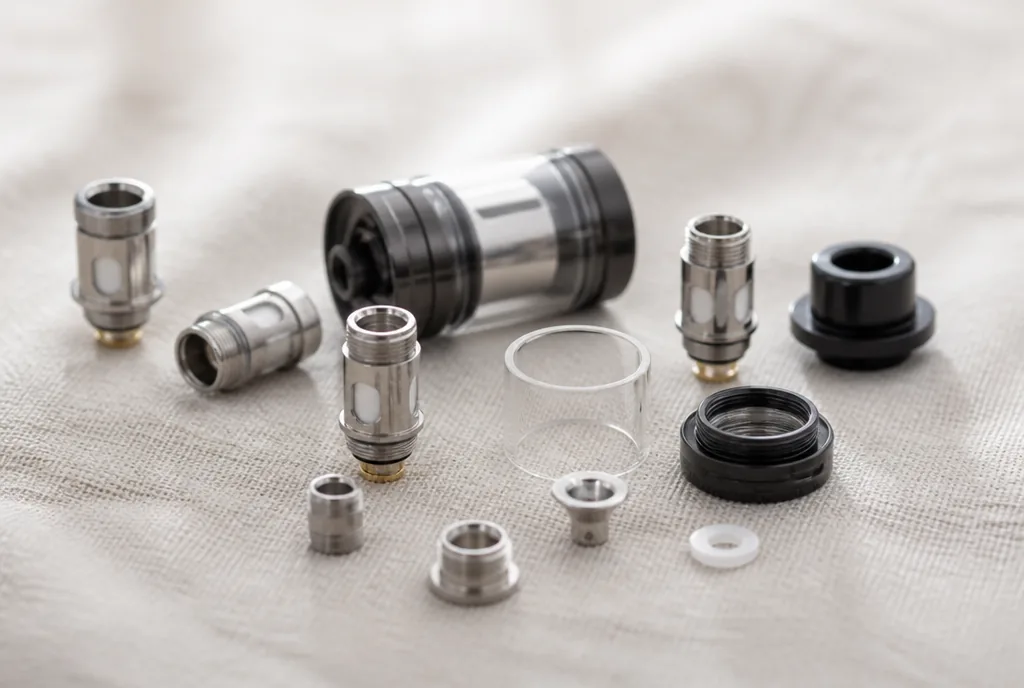
Lost Vape coils: what the UB range is really worth
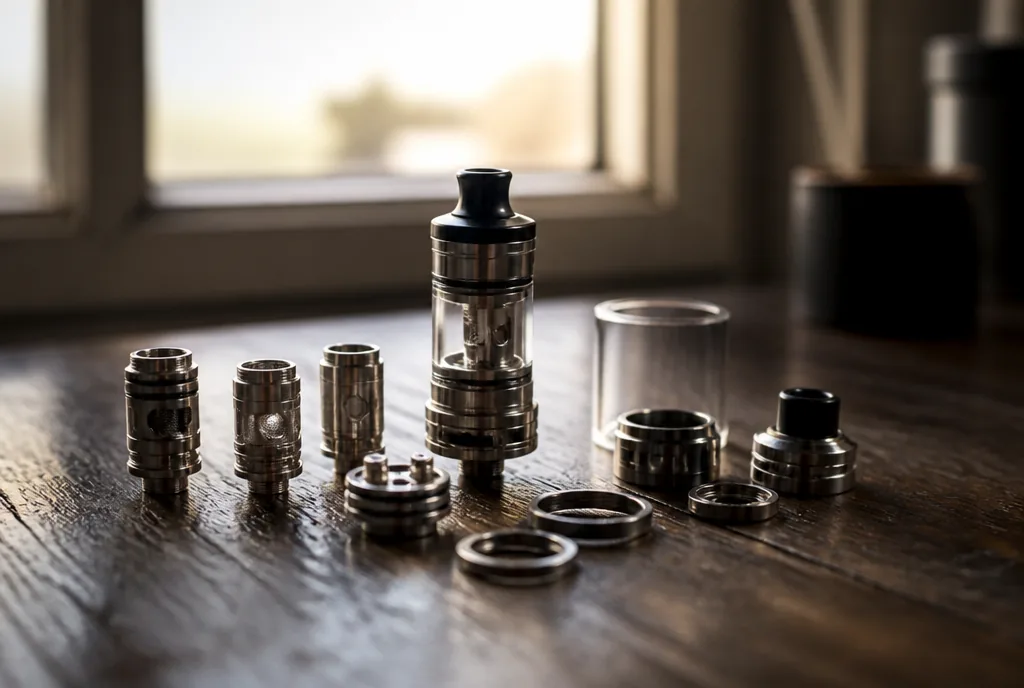
One shared prefix, several sub ranges, two different pack sizes and a compatibility that often stops at the exact tank the part was designed for. Choosing between Lost Vape coils means understanding a naming system the brand has never properly explained. The letters UB, expanded to Ultra Boost by British retailers, promise a coherent family. The promise holds up about halfway.
Lost Vape coils: which sub range actually does what
The sub ranges stocked in Britain divide along a clear line once you stop reading the brand and start reading the suffix. Each one targets a draw style, and moving between them usually means moving hardware, not just consumables.
The UB Mini sits at the tight, restricted end, aimed at the mouth to lung draw that dominates British shelves because of the two millilitre tank cap. It is the only route into that style within the range, and it comes attached to a specific set of devices.
The UB Lite occupies the middle ground, between a restricted direct draw and a moderate one. The UB Ultra pushes further into direct lung territory and turns up on the Centaurus B60 and B80 kits, which is where most British listings place it.
The UB Max is the high output end of the family, sold for the UB Max Pod Tank and the Centaurus sub ohm tank. The UB Pro is a separate line again, offered in mesh variants for a different set of devices, which is where the naming starts to strain.
The useful reading is short. Pick the sub range that matches your device first, then pick the resistance inside it, and read the wattage window printed on the coil itself rather than a figure quoted in a forum thread. That window is the manufacturer’s, and it is the only one that means anything.
The core problem: a platform name without a platform
A single prefix across a whole family sends the buyer a precise message, which is that these parts go together. That is exactly what UB implies, and it is exactly where the trouble starts.
British retailers are explicit about the limit. The UB Max references are listed as fitting the sub ohm tank and the dedicated pod tank, and are not universally compatible with other tanks in the brand’s own catalogue. That restriction is written by the shop, in the product description, not by the manufacturer on the box.
A set of Lost Vape coils bought on the strength of the prefix therefore has a serious chance of not entering the tank it was bought for. Compared with a genuinely transversal family such as the one we pull apart in our analysis of the Geekvape Z series, the Ultra Boost promise is purely lexical.
Two pack sizes inside one family
The detail looks trivial. It is not, the moment anybody tries to compare anything. The sub ranges are not sold in the same quantities.
The Mini, Lite and Ultra references are typically boxed in fives across British shops, while the Max references are boxed in threes. Comparing two items from the same family therefore means reducing each to a unit basis by hand, an operation nothing on the page assists with.
That kind of irregularity is not industrial accident. It makes intra range comparison more expensive in attention, and attention is the one resource a shopper has least of on a phone. It is a presentation choice, and it does not favour the buyer.
Push fit, a good idea with poorly documented execution
On the mechanical side, by contrast, the brand aimed well. The UB coils install by pressure alone, with no threads to engage, which removes the risk of cross threading and improves the seal.
The published procedure is consistent across British sources. Pull the old unit straight out, push the new one in until it seats, and let the interference fit provide both retention and sealing. No tool, no torque figure to respect, no thread to strip.
Some retailers describe reaching the coil from the base of the tank after unscrewing the lower section, others from the top. The descriptions converge on the point that matters: the coil does not screw, it pushes.
There is a documented weakness worth naming. Customer reports describe the connection pin working free of its rubber seat and trapping the positive leg of the mesh, which stops the mod reading the coil at all. That is a component defect rather than user error, and it produces a misleading symptom that sends people hunting elsewhere. Our piece on what the coil not detected message really says explains why that kind of cause stays invisible from the screen.
The figures the range never settles
An honest review has to point at what cannot be measured. On three genuinely decisive pieces of data, the public sources do not agree with one another.
Quoted service life varies by a factor of several between British listings for the same reference, from a handful of days to a month or more. We have not tested these coils and will not adjudicate, but a consumable whose stated endurance swings that far depending on the seller cannot be the basis of any budget.
The power window is not always internally consistent either. It is not unusual to find one range quoted in a listing’s descriptive text and a wider one in the technical specification table on the same page. A buyer trusting the second line pushes the coil well past what the first line advises, with no warning that the two disagree.
Category pages are no more reliable. It is possible to find a section supposedly devoted to this brand whose opening paragraph describes a competitor’s platforms altogether. The error takes three seconds to spot, and it says a good deal about the attention this aisle receives.
What Lost Vape coils get right, and it should be said
The picture would be unfair if it stopped there. Two design choices deserve credit, precisely because they are missing elsewhere.
The first is the spread of alloys. Nichrome mesh on the lower resistances and kanthal on the higher ones is a deliberate split rather than one alloy applied everywhere, with kanthal generally associated with a more progressive ramp and a longer working life. That is a judgement made and owned, not a shortcut.
The second is the honesty about excluded uses. The documentation states that the high output references are not suited to nicotine salts, which are formulated for low power and a tight draw. Very few product listings bother to write down what their product cannot do, and this one does.
Frequently asked questions
What does the prefix UB actually stand for?
British retailers expand it to Ultra Boost, notably in the titles of the bundles they sell. The brand uses it as a range prefix without publishing a formal definition on its own product pages.
What PG and VG ratio suits the high output references?
Sellers advise a vegetable glycerine dominant base for the mesh references, since the wide liquid channels let a thin liquid creep up the chimney. The exact ratio depends on the device and the coil.
Should I wait before the first draw?
The published procedure is to wet the visible cotton through the openings, fill the tank, then leave it standing for several minutes. A coil fired dry is described as damaged from the very first use.
Are these coils still stocked everywhere?
Not entirely. At least one British retailer lists certain references as discontinued, which is worth checking before building a stock around a single reference.
Will a UB Max fit a Thelema Solo?
Customers ask, but no seller confirms it as an official fitment. Absent that confirmation, the sensible course is to stick to the tanks actually listed on the packaging.
Should you buy Lost Vape coils today
For anyone who already owns the sub ohm tank or one of the brand’s dedicated pod tanks, the answer is straightforward. The range does the job, the sub ranges cover the realistic spread of draw styles from restricted to direct, and push fit installation is a genuinely better mechanical idea than a thread that can be crossed.
For anyone buying Lost Vape coils without first checking the exact reference their tank takes, the risk of walking away with an unusable pack is real. A shared prefix is not a guarantee of fitment, and it should be the manufacturer, not the retailer, spelling that out on the box.
The wider lesson is the one that runs through this whole product category. A consumable named after its cheapest component, sold without any published unit of service life, leaves the buyer doing the manufacturer’s homework. Our piece on what the word coil now covers sets out why that naming drift is not a harmless quirk of marketing.
Editorial content for adult readers only. Vaping products usually contain nicotine, a substance that causes addiction. Not for sale to under-18s in the United Kingdom. This article is not a buying recommendation.
Also on the site
Coil calculator: the right number, not the proof
A coil calculator returns a theoretical resistance. What it cannot see, and why the ohm reader stays the only figure worth trusting before you vape. Points of viewVape coil: one word, two very different products
The words vape coil once meant a wound length of wire. On British shelves they now mean a sealed cartridge, and that drift costs the buyer money.
Geekvape Z coils: the range put under scrutiny
Which reference to choose, which fitments genuinely hold, and where the range contradicts itself. Our argued pick among the Geekvape Z coils.